I read The Map that Changed the World some time back. And then an engineer friend of mine lent me his copy. And so I re-read this wonderful book, perhaps this time with new eyes thanks to all my endeavours on the dinosaur and geology front.
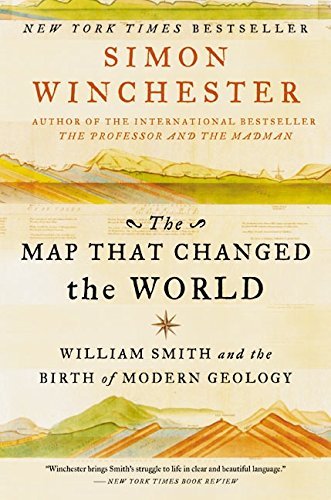
The Map that Change the World - a book by Simon Winchester
Doomsday Postponed!
Back in the early 1800s, the Earth was thought to be just a few thousand years old and was only going to last a few thousand years more. In fact, that thought lasted right through into the early years of the 20th Century. I read another book called ‘Measuring Eternity’ by Martin Gorst, in which one of the chapters is titled ‘Doomsday Postponed,’ alluding to a headline of at least one of the British newspapers announcing that the Earth was going to last longer than that predicted by Lord Kelvin, the pre-eminent physicist of the day.
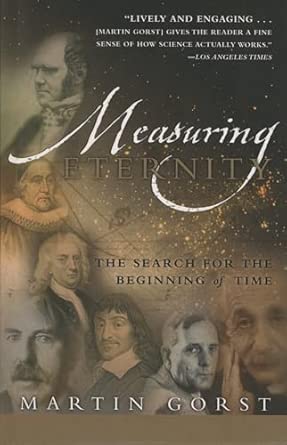
Measuring Eternity by Martin Gorst - it's a good read
With Earth only being a few thousand years old, there was insufficient time for rocks to form, let alone fossils, and the latter were often dismissed as ‘sports of nature.’ But that was all about to change thanks to a surveyor and canal builder called William Smith. Building canals is not like building bridges or roads or skyscrapers. For one, it requires spending a great deal of time digging in the earth.
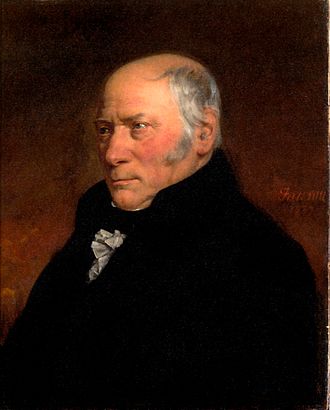
William Smith - the father of English geology. Maybe the Worlds geology.
And careful digging too, for as we all know, water doesn’t flow uphill, and as a result the canals need to work with the topography wherever possible, following the contours and where necessary cutting through the hillsides. Where elevations change significantly, locks need to be built. So Smith spent his time surveying and then digging. And digging in the earth is always enlightening, as I well know, having spent many years digging in the earth myself. In certain parts of the world, and especially where Smith was plying his craft, there are fossils to be found. And Smith dug up fossils loads of fossils, along with sandstones, mudstones, limestones, marls and oolites.
Fossils acted like time stamps in the rocks
It is always useful, when working with these kinds of materials, to develop an understanding of how they behave – are they easily excavatable, do they stand vertical when excavated, do they hold water, which direction do the beds dip, and so on? Smith's genius was recognising that the distribution of fossils was not random, and in so doing realised that he held the key to correlating or matching strata across continents, and as it turned out, between continents, as well as bolting down their relative ages. In short, ammonites, trilobites, brachiopods, and other invertebrates acted like time stamps in the rocks, allowing him to predict which fossils would appear in which layers, even hundreds of kilometres apart.
geological mapping requires an understanding of the orientation of the strata
Undoubtedly Smith had to price his work, and being able to make predictions as to what geological formations his canals would traverse would be a most useful tool. So he began to map out the lateral distribution of the various strata based on surface outcrop. But that isn’t enough – geological mapping also requires an understanding of the orientation of the strata, in other words the angle and direction at which they dip into the earth. And so Smith began to quietly put together a map of the strata of the south of England in which he was working.
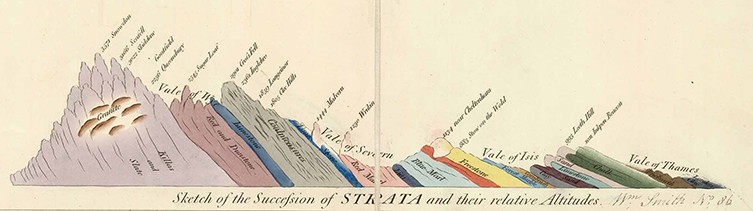
Smith's cross section of the strata from Wales to the Thames Valley
And like any geologist worth his or her salt, it can become something of an obsession to map out the vertical and lateral extent of a geological formation, and to speculate as to its geological history. And so the map expanded, to ultimately become a map of the geology of England and Wales. And that is exactly what he called his map. Published in 1815, the Geological Map of England and Wales changed the world and our view of it, and earned Smith the title, “The Father of English Geology.”
he fell into debt and even spent time in a debtor’s prison
It wasn’t all plain sailing for Smith though – his map was expensive to produce, and certain people in the newly formed Geological Society of London tried to steal his work. He fell into debt and even spent time in a debtor’s prison. Recognition came late, but in 1831 the Geological Society of London awarded him the very first Wollaston Medal, the highest award that the society can confer on a fellow geologist, finally acknowledging his enormous contribution to the discipline, and to science overall.
One of the original hand-painted geological maps still in existence hangs behind curtains in the Geological Society headquarters in London.
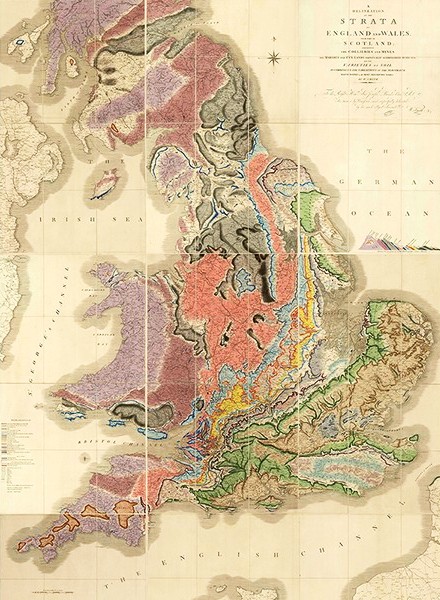
Smith's Geological Map of England and Wales
And why does it matter you may well ask?
Well, the principle that fossils succeed one another in a definite, recognisable order is a fundamental tenet of geology and palaeontology. Thanks to Smith's insights, geologists and palaeontologists can correlate rock layers across and between continents. It made it possible to construct a geological time scale, and allowed for fossils, including dinosaurs to be placed in the right chapters of Earth’s history.
So every time a palaeontologist digs into the past, they’re following a path first laid out by William Smith. We owe him a massive debt of gratitude.
For all things geological and palaeontological, follow us here, and be sure to check out our YouTube channel here, our Facebook page here, and our Instagram posts here.
The Bone Diggers' Club

Dinosaurs make for Smart Kids!
Don't forget to check out the Bone Diggers' Club. A CNN study back in 2017 showed that a fascination with dinosaurs makes for smart kids - and being as smart as you look this will resonate with you. Go check it out bye following the link.