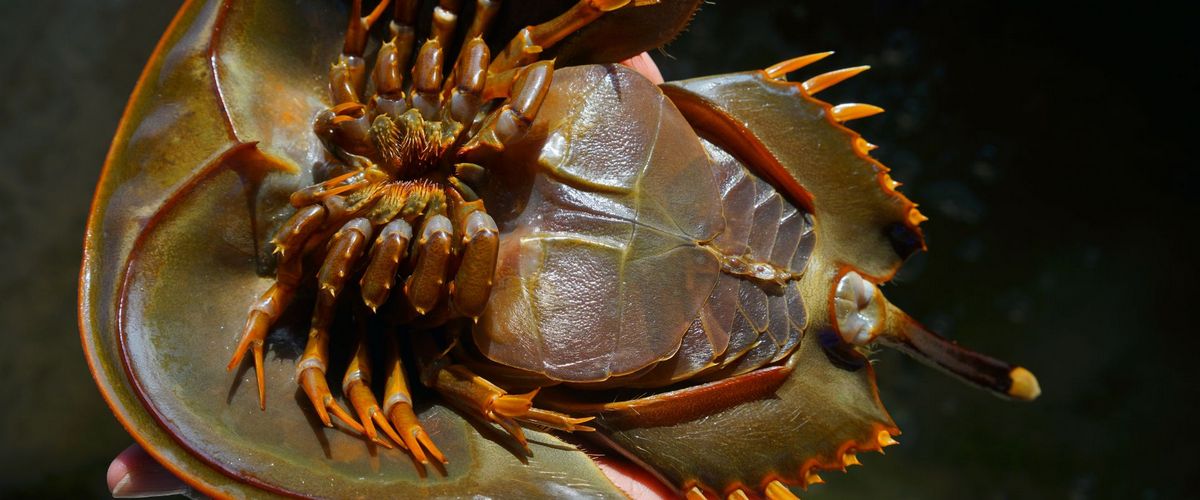
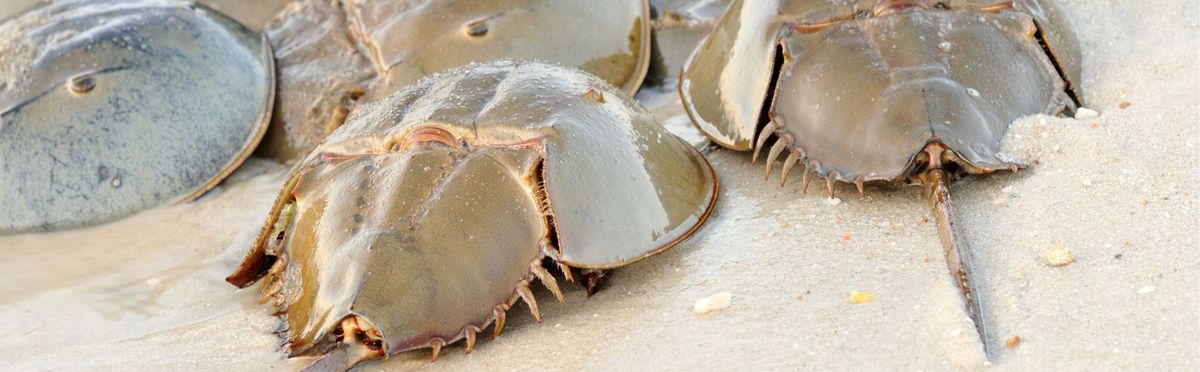
I get it — they are warm, furry, companionable, loyal and full of character, and if left to their own devices, completely out of control. They will sit companionably by your side for hours, if not days on end, are grateful for small mercies, love going for walks, are always happy to see you, and never seem to be grumpy. But if someone were to give me a choice of a pet, I would get myself a horseshoe crab. It can’t fetch and carry, it can’t sniff out bombs, it can’t herd sheep, it can’t welcome you home. But what it can do is remind me that they have been around since the Triassic, 250 million years ago, with similar-looking relatives extending back to the Ordovician, some 445 million years ago.
Hey, they aren’t even real crabs, but rather arthropods — chelicerates if you really want to get in deep. They are more closely related to spiders, ticks and scorpions. And they have been hanging on this planet for hundreds of millions of years.
I remember seeing some in a tank in a museum in Malaysia, if my memory serves me correctly. Sadly, they don’t occur along the shores of South East Africa, but that isn’t a huge burden to bear in view of the other amazing things that do occur along this coastline.
In last week’s post I spoke of my displaced Irishman, Dr Mason. I had the pleasure of doing my honours degree at another university, and there I met Dr Hiller, who was, you guessed it, another displaced Irishman. If I had had to put my back to them, I wouldn’t have been able to tell them apart if all I had to go on were their voices. And believe it or not, they both taught sedimentology and palaeontology.
Dr Hiller had on his door a sign that said “Life is a Beach” and looking back on it, there is much to be said for that sentiment. For where there is a beach there is life, entertainment, wonder and endlessly fascinating moments. Dr Mason had taken us to the beach and shown us sedimentary facies, and lots of noonies crawling around in the rock pools. Dr Hiller did likewise, and as a result we spent a great deal of time peering into beautiful rock pools looking at echinoderms, chitons, Patella, Mytilus and so on.
Those two men instilled in me a love for all those wonderful creatures that occupy a somewhat lowlier place in our human estimation. Dogs and cats get the attention, as do parrots, hamsters and rabbits. But give me a horseshoe crab any day. Or let me loose on a beach and I will be there peering once more into rock pools looking at beautiful creatures quietly going about the business of earning a living. Wonderful indeed. And if there aren’t any creatures to be seen, then there are always rock formations to inspect, interesting accumulations of sand, dolphins surfing the breakers, or humpback whales migrating northwards to the tropical calving grounds.
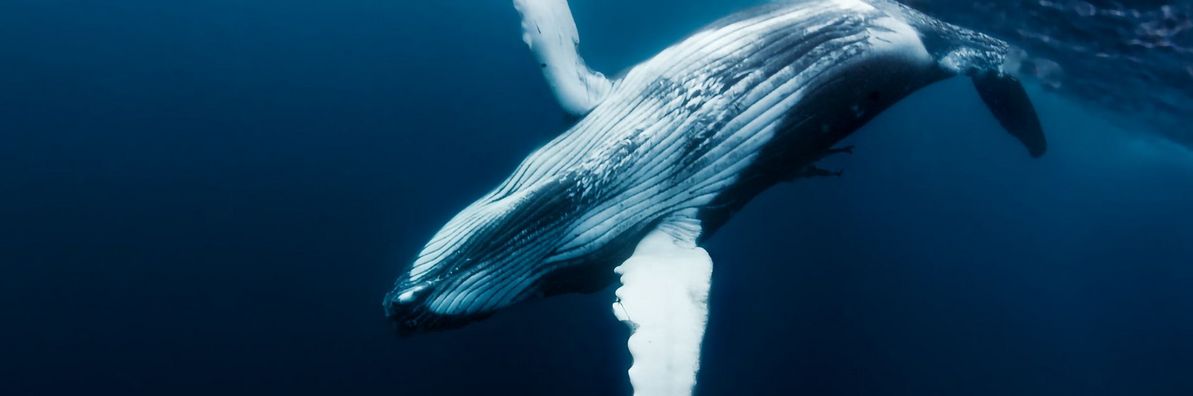
The littoral, where land meets the ocean — that turbulent, wave-tossed zone between two worlds — is a sacred place. It is where vast oceans, the bounding main, meet land. No matter what development takes place at the back of the beach, that strip between land and sea will always be a place where nature and the creatures that live in it are dominant. Buildings may go up, but the echinoids still wave their spikes gently in the warm waters, the limpets still cling tenaciously to the rocks, the whales still push northwards in their winter migrations, impervious to the trials and tribulations of their human counterparts scurrying up and down the coast roads. And the southern rollers still roll in, breaking themselves upon the littoral as they have done for millions of years.
And so there I think I must leave it. In the interim, and before I next head on down to the beach, bring me a shell, bring me a fossil, bring me a bone or bring me a rock and and let us unravel the story of that tiny part of the Earth history that you hold in your hand. If you have no rocks or shells, or fossils, then bring some coffee or dark chocolate, and then we can hang out and be happy.
See you at the DinoZone. And don't forget to sign up for the Bone Diggers' Club. The link is here or click on the button below.